


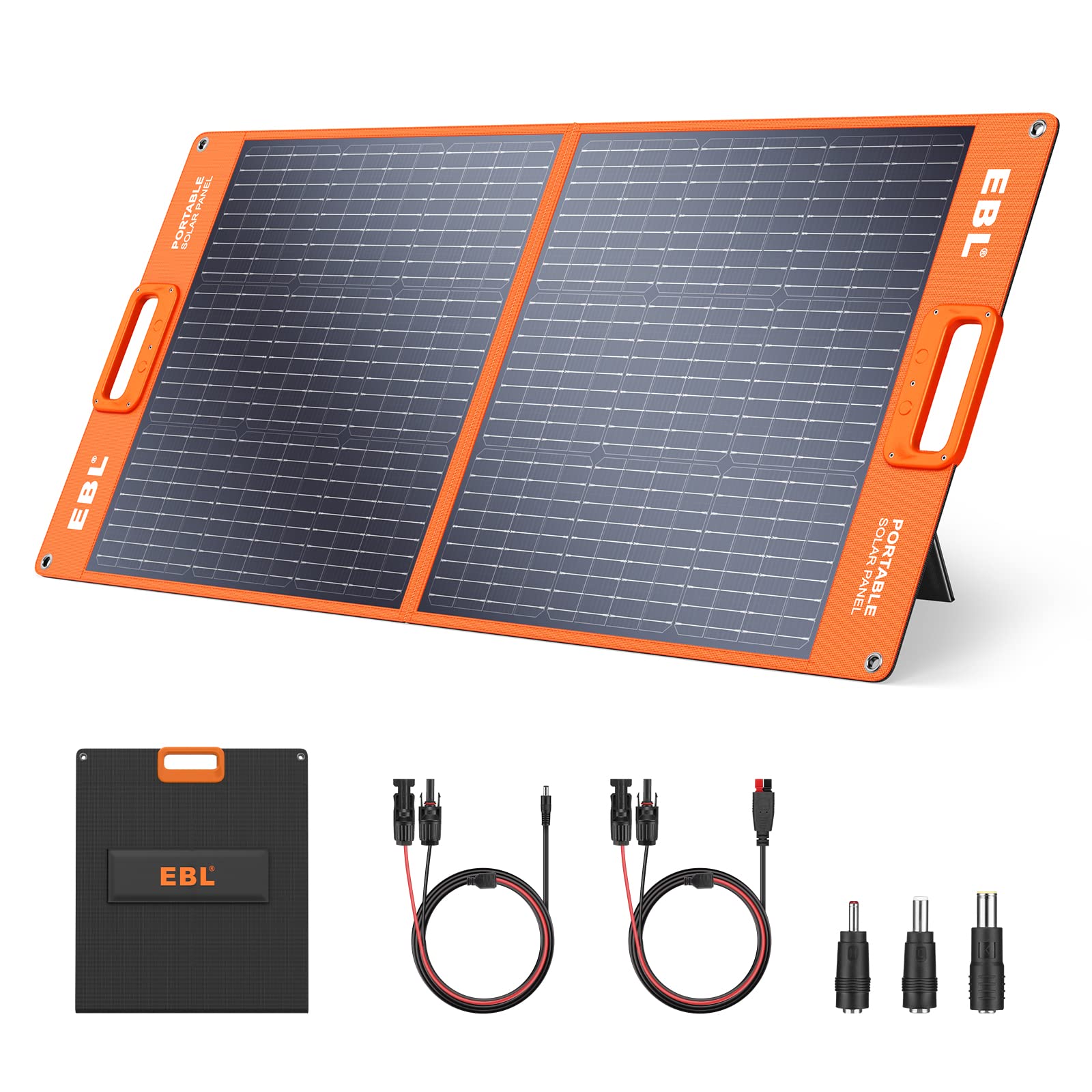
To enable comparisons between different panels, the performance of all panels are specified against a set of conditions used industry-wide called Standard Test Conditions (i.e. cell temperature of 25°C and an irradiance of 1000W/m2 with an air mass 1.5 [AM1.5] spectrum). These conditions are extremely unlikely to occur in real life.
Normal operating cell temperature (NOCT)
NOCT provides power ratings that are lower but more realistic. So instead of 1000W/m2 it uses 800 W/m2, which is closer to a reasonably sunny day with scattered clouds. It uses an air temperature of 20°C instead of solar-cell temperature, and takes into account a 1m/s breeze cooling the back of a tilted solar panel. This is applicable to a conventional glass and aluminum framed panel mounted on a building or ground array but not a lightweight panel laid horizontally (which will obviously run hotter!)
Rated output specifications
The rated power of an electrical device, including a solar panel, is typically calculated by multiplying the rated voltage (in volts, V) and the rated current (in amperes, A) of the device. The formula for calculating rated power is as follows:
Rated Power (Watts, W) = Rated Voltage (Volts, V) x Rated Current (Amperes, A)
For a solar panel, you can find the rated voltage and rated current on the panel's specification sheet or label. Once you have these values, simply multiply them together to calculate the rated power.
For example, if a solar panel has a rated voltage of 24 volts and a rated current of 5 amps, the rated power of the panel would be:
Rated Power = 24 V x 5 A = 120 W
So, the rated power of this solar panel is 120 watts, which means it is capable of producing 120 watts of electrical power under its rated conditions when exposed to sunlight.
Open-circuit voltage (Voc)
The open circuit voltage is the maximum voltage that the solar panel can produce with no load on it (i.e. measured with a multimeter across the open ends of the wires attached to the panel). If two or more panels are wired in series it will be Voc of panel 1 + Voc of panel 2, etc. The voltage is generally highest mid-morning as the sun rises rapidly and the panel temperature is still quite low.
The Voc + approx 3.5 per cent must be less than the maximum solar voltage permitted by the solar-charge controller. Some controllers shut down if it’s exceeded, while some may continue to operate but the lifespan of the controller could be compromised or it may result in immediate destruction of the device.
Short-circuit current (Isc)
Short-circuit current is the current that flows out of the panel when the positive and negative leads are shorted together. The current can be measured by passing the current through a multimeter configured to measure amps (this does not harm the panel, but care must be taken to avoid arcing).
The Isc + 20 per cent is recommended to determine the required current handling capacity of a compatible solar-charge controller. This is the highest current the solar panels will produce under standard test conditions – note that under a clear sky, at midday in summer, and tilting the panel towards the sun you could get significantly more current.
Voltage at maximum power (Vmp)
The voltage at maximum power is the voltage when the power output is the greatest. It is the actual voltage you want to see when it is connected to the MPPT controller under standard test conditions. In practice the actual Vmp will vary during course of a day and with temperature, shading, soiling of the panel surface, etc. You can measure this voltage with a multimeter at the solar input terminals of an MPPT controller during bulk-charge mode.
Current at maximum power (Imp)
The Imp is the current (amps) when the power output is the greatest. It is the actual amperage you want to see when it is connected to an MPPT controller under standard test conditions in bulk-charge mode. The actual current varies with sun strength on the panel. Note that the current that a PWM controller will receive is slightly higher than the Imp under standard test conditions.
Maximum power point (Pmax)
The Pmax is the sweet spot of the solar panel power output, where the combination of the volts and amps results in the highest wattage (volts x amps = watts).
The ‘smarts’ inside an MPPT controller periodically measures the panel voltage under varying loads and then adjusts the solar input circuit to balance the volts and amps and maximise the power output during bulk-charge mode. The wattage that a solar panel is listed as is the Pmax where :
Pmax = Vmp x Imp at standard test conditions.
The most important parameter
The most important parameter for a solar panel often depends on your specific needs and circumstances. However, if you're looking for a single parameter that can give you a good overall idea of a solar panel's performance, the Efficiency is a key factor. Solar panel efficiency is a measure of how effectively the panel converts sunlight into electricity.
Solar panel efficiency is typically expressed as a percentage and can be calculated using the following formula:
Efficiency (%) = (Electrical Output / Solar Energy Input) x 100
Here's how you can calculate efficiency:
-
Determine the Electrical Output: This is the rated power of the solar panel, which you can calculate using the formula mentioned earlier: Rated Power (W) = Rated Voltage (V) x Rated Current (A).
-
Determine the Solar Energy Input: Solar energy input is the amount of sunlight that falls on the panel. It's typically measured in watts per square meter (W/m²). You'll need to consider the location and orientation of the panel to estimate the solar energy input. You can find average solar irradiance data for your location to get an idea of the energy input.
-
Calculate Efficiency: Once you have the electrical output and solar energy input, plug them into the efficiency formula mentioned above.
Efficiency is an important parameter because it tells you how well a solar panel can convert sunlight into electricity. Higher efficiency panels are generally more desirable because they can generate more electricity for a given amount of sunlight.

